Japan’s Year-End – New Year’s Eve and the Ways It Is Spent
In many Western countries, the centerpiece of the holiday season is, of course, Christmas.
Cities glow with illuminations, families gather around the tree, and the aroma of roast turkey fills the air.
Japan enjoys Christmas as well, but the true axis of the year-end is Ōmisoka, New Year’s Eve.
December 31 is not treated merely as “the last day of the year,” but as a day to clear away the dust and loose ends that have accumulated over the past twelve months and to put one’s mind in order.
If Christmas trees and gift exchanges symbolize the Western year-end, then in Japan that role is played by the year-end housecleaning and New Year’s Eve soba.
In Japan, just as much importance is placed on how things end as on how they begin.
The familiar saying “All’s well that ends well” reflects part of this sensibility.
The big housecleaning at year’s end and the eating of soba on New Year’s Eve are concrete ways of carefully closing the year and connecting it to the next.
Year-End Housecleaning – Putting the Home, and Life, in Order
One essential part of preparing for New Year’s Eve is the ōsōji, the big year-end cleaning.
This goes beyond simply making the house look tidy. It is closer to a process of letting go of a year’s worth of dust and stagnation and returning one’s surroundings to a clean, reset state.
People tackle places they tend to neglect in daily life—windows, ventilation fans, the backs of closets—sorting through unused belongings and throwing out what is no longer needed.
As the rooms are cleared, thoughts begin to settle as well, and the sense of “the year is really coming to an end” slowly takes on a more tangible feeling.

During the year-end cleaning, even the usually neglected corners are thoroughly cleaned.
The housecleaning also becomes a major family event.
As family members share out the tasks and work together, the act of tidying shifts from a mere chore into shared time for looking back on the year and drawing a line under it.
Packing Osechi – Preparing to Welcome the New Year
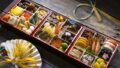
Another important part of year-end preparations is packing osechi ryōri, the traditional New Year dishes, into tiered lacquered boxes.
Osechi is New Year’s cuisine, but it has long been supported by the careful handwork done in the final days of the old year.
Black beans, herring roe, rolled omelet, and more—the exact lineup differs from household to household, but all are dishes that together form the “New Year’s table.”
※Read more: “What is Osechi, the Symbol of Japanese New Year?”
The process of arranging these foods neatly into the boxes is also a way of quietly placing hopes and wishes into the year that is about to begin.
With changing lifestyles, many families now order osechi from department stores or specialty shops.
Even so, the custom of “preparing osechi” has been passed down as part of drawing the year to a close and making ready to welcome the new one.
Toshikoshi Soba – In Japan, Soba Is Eaten on New Year’s Eve
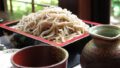
The food most closely associated with New Year’s Eve is toshikoshi soba, the soba noodles eaten to “cross over” from one year to the next.
Whether served hot in broth or cold on a bamboo tray, the style varies by region and family.
What is shared across Japan is the custom of eating soba at the end of the year.
Why soba on New Year’s Eve?
There are several theories, but all relate to soba being regarded as a food that brings good fortune for the year ahead.
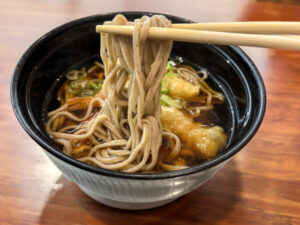
Toshikoshi soba is eaten as a New Year’s good-luck custom.
Because soba breaks easily, it is associated with cutting off the misfortunes and hardships of the year—a symbolic act of casting off bad luck.
Its long, slender shape inspires wishes for long life and for the family line to continue without interruption.
There is also a story that gold- and silversmiths once used buckwheat flour to gather scattered gold dust, which has led to an association with good financial fortune as well.
This custom is said to have spread in the Edo period. Even today, long lines form outside soba restaurants on New Year’s Eve.
Toshikoshi soba remains a living custom: a way to mark the end of the year and ready one’s heart to step into the new year.
Joya no Kane – A Night for Listening to the Bells
Late on New Year’s Eve, nothing heightens the sense of the year turning quite like the sound of Joya no Kane, the New Year’s Eve temple bells.
From the night of December 31 into the moments around midnight on January 1, deep, lingering tones ring out from temples across Japan.
These sounds push back the everyday noise of the city and quietly make us aware that the year is coming to an end.
Many people know this scene from television broadcasts and news reports, but hearing the bell in person makes the turning of the year and the arrival of the new one feel all the more real.
With each toll of the bell, one symbolically lets go of a portion of the worldly desires and attachments that have accumulated over the year.
※A more detailed look at Joya no Kane can be found in the separate article : “Joya no Kane – The Bell that Marks an Ending and a Beginning”
The sound of these bells quietly reflects the Japanese spirit of treating endings with care.

The Japanese Way of Bringing the Year to a Close
In Japan, there is a strong cultural emphasis on “bringing things to a beautiful close.”
New Year’s Eve—the final day of the year—has been regarded as an important time to put one’s surroundings in order and draw a line in one’s heart before stepping into the new year.
The customs of year-end housecleaning, toshikoshi soba, and Joya no Kane are all expressions of this Japanese way of closing out the year, given tangible form.
By treating the ending with care, we are able to welcome the new year in a better frame of mind.
That, in essence, is the Japanese way of bringing the year to a close.
コメント