
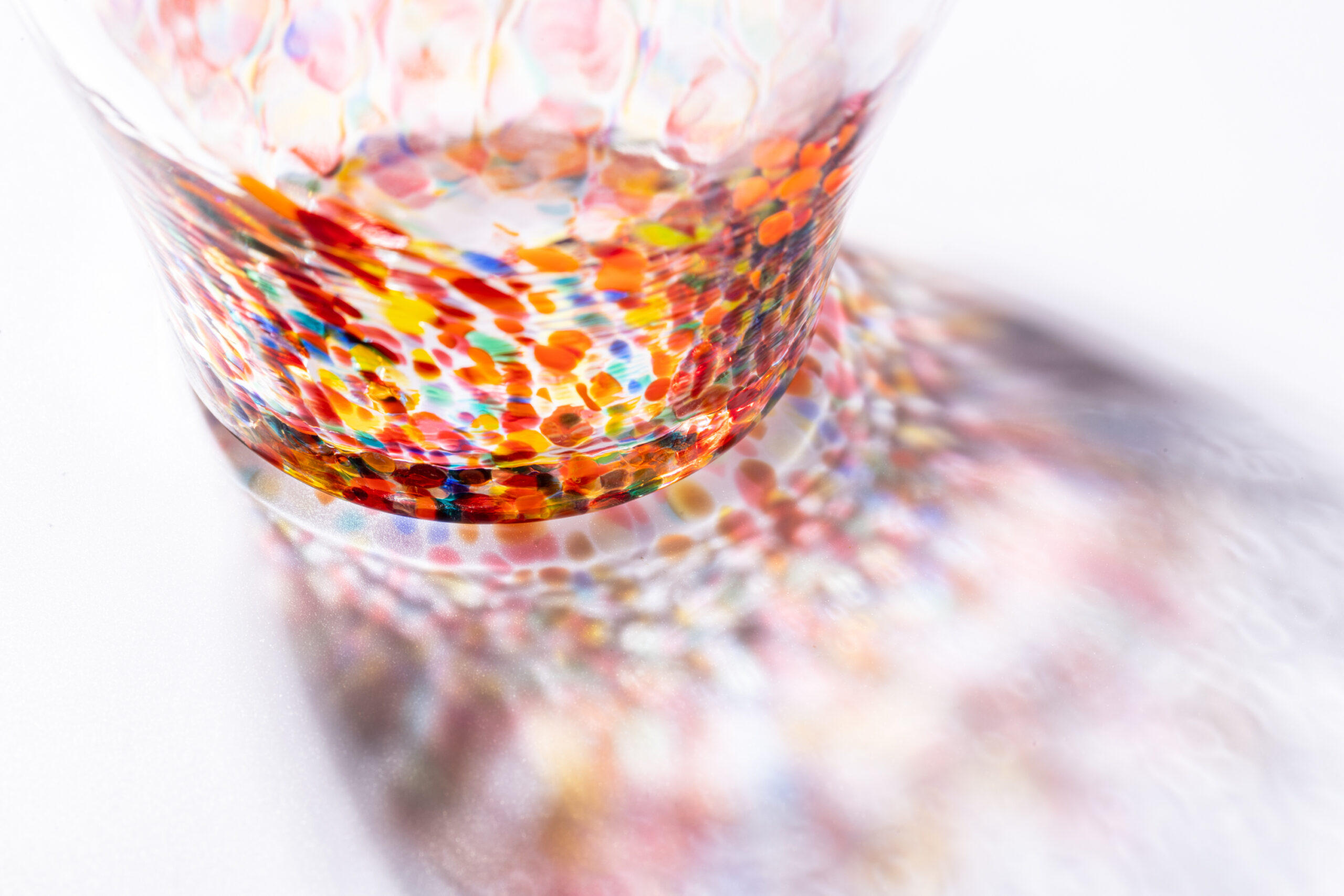
Tsugaru Vidro
— Aomori Glassware That Reflects the Four Seasons
Vivid colors that seem to capture the sky and sea of Aomori.
Tsugaru Vidro is a form of glassware created by the hands of artisans, in which the beauty of Japan’s nature and long-nurtured tradition live on.
Aomori lies at the northern tip of Japan’s main island.
The clear blue of the Tsugaru Strait, the deep green of the Shirakami Mountains, and in winter the silver landscape that covers the earth.
The scenes shaped by these four distinct seasons quietly reside within the rich colors and transparency of Tsugaru Vidro.
Hold it to the light, and the landscape of Aomori emerges.
The shimmering glow reflects the passing of the seasons.
Each time it is picked up, a new expression appears within everyday life.
The History of Tsugaru Vidro
The history of Tsugaru Vidro is not long.
Yet behind it lies handwork that has continued in the severe climate of Aomori.
The time accumulated in this land would later enter daily life in the form of vessels.
The Northern Way of Life Supported by Glass Floats
Tsugaru Vidro originally developed from the techniques used to produce glass fishing floats in the Tsugaru region of Aomori.
Exposed to the cold sea wind, artisans continued to make durable and practical glass floats.
For fisheries operating in the rough waters of the Tsugaru Strait, these floats were indispensable tools.
They kept the nets in place and served as markers on the sea, supporting daily work and forming part of the region’s way of life.
Because they were used in such harsh conditions, what was required was not decorative beauty.
Thickness. Uniformity. Resistance to breaking.
The ability to remain steadily afloat.
The accumulation of trial and error in meeting these demands cultivated the reliable skills needed to handle glass.
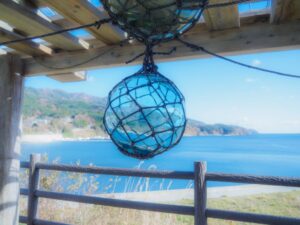
Tsugaru Vidro developed from the techniques used to make glass fishing floats.
The Birth of Tsugaru Vidro
Based on this solid foundation of technique, Tsugaru Vidro was born in 1977, when Hokuyo Glass transformed these skills into glassware with artistic value.
Handwork that had been refined for practical fishing equipment was, for the first time, given the role of a vessel.
Upon the strength and precision required by the northern sea, an expressive use of color was layered.
The blue of Aomori’s waters, the red of its apples, the warm glow of the Nebuta Festival.
Colors tied to the land began to live within the glass.
While preserving tradition, the artisans continued to innovate, creating their own techniques and designs.
Today their work is highly valued both in Japan and abroad, and has spread into daily life in the form of tableware and vases.
Free-Blown Glass and the Uniqueness of Each Piece
Even when glasses from the same series are placed side by side, each is slightly different.
The depth of color at the base, the thickness of the rim, the way the light moves across the surface.
The moment it is held, those differences are naturally felt.
These variations are created through the technique known as free-blowing.
Molten glass gathered on the end of a blowpipe is shaped in mid-air while the artisan breathes into it and rotates it.
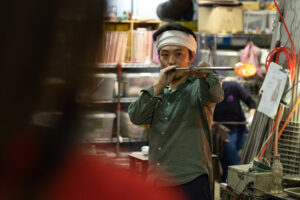
Tsugaru Vidro is made using a technique known as free-blowing.
Molten glass changes its softness with the slightest difference in temperature, and even a small variation in movement alters the way it expands.
Unlike glass formed in molds, no two pieces are ever the same.
As a result, each vessel changes its expression whenever it receives light.
These small differences accumulate, and every piece becomes a vessel with its own presence.
The Art of Color in Tsugaru Vidro
The greatest charm of Tsugaru Vidro lies in its rich color.
The blue of the sea, the red of apples, the warm light of the Nebuta Festival — colors rooted in the land quietly overlap within the glass.
Depending on the angle and the strength of the light, the density of the color shifts, and tones resting at the base suddenly emerge.
Even the same piece shows a completely different expression on a morning windowsill and on an evening dining table.
Many series evoke Japan’s four seasons:
the pale pink of spring cherry blossoms,
the vivid colors of summer festivals,
the deep hues of autumn leaves,
and the contrast of winter sky and snow.
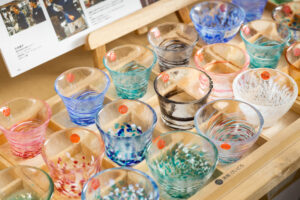
Tsugaru Vidro features a variety of series inspired by the four seasons.
These colors are not for display alone.
They reveal their beauty through use, receiving light within everyday life.
This way of existing — working within daily life while embodying beauty — is what may be called the beauty of utility.
A Vessel That Holds the Climate of Aomori
Tsugaru Vidro retains within its glass the time nurtured by the climate of Aomori.
Its colors overlap inside the vessel and change expression whenever they receive light.
In the movement of daily life it gathers light, shifts in tone, and reveals its beauty only through use.
This quiet presence is the very essence of a craft grounded in the beauty of utility.
To express the beautiful landscape and climate of Aomori within a small vessel —
that is the true charm of Tsugaru Vidro.