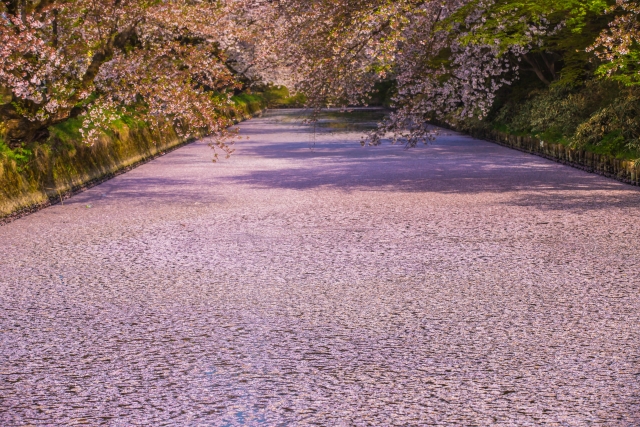
Hana-ikada, or “flower rafts,” gently tinting the water’s surface. These drifting petals remind us of the beauty of “Mujo” (Impermanence)—the truth that nothing stays the same forever.
With the arrival of spring, cherry blossoms softly tint the Japanese archipelago in pale pink.
Their brilliance naturally draws people to a halt.
Blossoms in full bloom are, undeniably, beautiful.
Yet for many, it is the moment they begin to fall that leaves the deepest impression.
Petals drop to the ground, drift across the surface of rivers, and scatter in the wind.
In that movement, there is a quiet blend of poignancy, stillness, and a certain clarity in the way they come to an end.
Why does this fleeting image affect people in Japan so strongly?
Behind this response lies a way of seeing the world that has shaped Japanese culture over centuries.
It is known as mujōkan—an awareness that all things are subject to change.
What Is Mujōkan (Impermanence) ?
No matter how beautifully they bloom, cherry blossoms eventually fall.
Nothing in this world remains unchanged.
This understanding is expressed in the Buddhist idea of shogyō mujō, often translated as “the impermanence of all things.”
Everything before us will, sooner or later, pass away.
From this perspective, the assumption that something will remain as it is begins to feel slightly out of step with reality.
Mujōkan is the disposition of accepting change not as something unusual, but as the natural condition of existence.
What moves us in the falling of cherry blossoms is not only their beauty.
In the way they bloom all at once and fall all at once, we are confronted with the simple fact that nothing remains the same.
Impermanence in Buddhist Thought
The idea of shogyō mujō is one of the foundations of Buddhism.
The more strongly we cling to things as if they were permanent, the more suffering arises.
It teaches that change is not an exception, but something to be accepted.
In Japan, however, this idea did not remain only a religious teaching.
It gradually became embedded in everyday ways of seeing and living.
Rather than focusing on loss, attention shifted toward the intensity of a moment that will not last.
In this way, impermanence came to shape a distinct aesthetic sensibility.
How Impermanence Became an Aesthetic
The concept of impermanence itself did not originate in Japan.
It was introduced with Buddhism as a way of loosening attachment.
Over time, however, it extended beyond doctrine and became part of lived experience.
In a country where the seasons change so clearly, the landscape is in constant transition.
Flowers bloom and fall, mountains turn color, and then return to stillness.
The same seasons come again, yet no single moment ever repeats itself.
Through these repeated experiences, impermanence came to be understood not as an abstract idea, but as something entirely ordinary.
Because things come to an end, the present moment carries a particular weight.
Over time, this awareness gave rise to an aesthetic in which transience itself is perceived as beautiful.
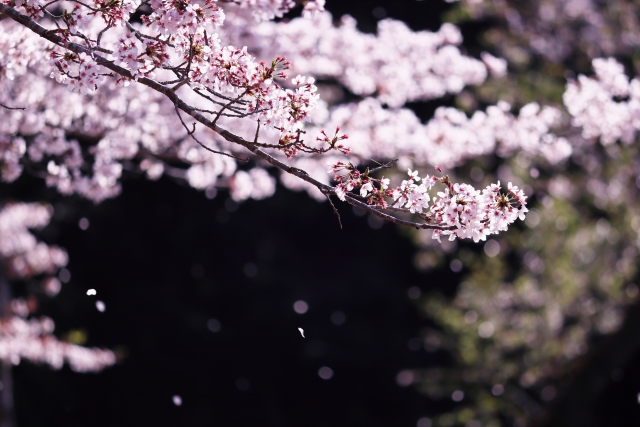
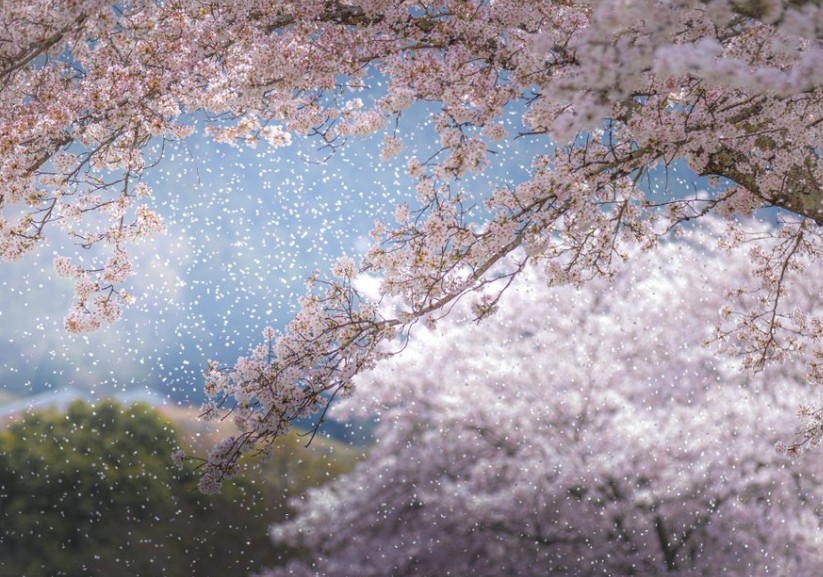
The very moment they leave the branch. In that fleeting brilliance of constant change, Japanese people found the profound truth of “Mujo” (Impermanence).
The Aesthetics of Ending and Graceful Departure
The beauty of falling cherry blossoms cannot be explained by impermanence alone.
It also reflects a sensitivity toward how things come to an end.
Impermanence recognizes that all things change.
The aesthetics of falling blossoms, however, shifts attention to the manner of that change—how something ends.
In the way cherry blossoms fall without hesitation, we perceive a kind of clarity.
After reaching full bloom, they scatter all at once on the wind.
There is no prolonging.
If impermanence describes the condition that things must change, then this aesthetic asks how one meets that moment of change.
Knowing that change cannot be avoided, the manner of departure takes on meaning.
At the height of their beauty, cherry blossoms release themselves without hesitation.
Impermanence points to the nature of the world.
Gracefulness suggests a way of living within it.
In the falling blossoms, the two overlap.
Impermanence in Literature and History
The development of impermanence into an aesthetic sensibility is closely tied to literature.
Rather than simply lamenting change, people in Japan have long expressed it through language.
Impermanence in The Tale of the Heike
The Tale of the Heike is one of the most well-known literary expressions of impermanence.
The sound of the bells of Gion Shōja echoes the impermanence of all things.
The color of the flowers reveals the truth that the prosperous must decline.
As these opening lines suggest, neither power nor prosperity endures.
By depicting the rise and fall of the Taira clan, the work presents impermanence not as an abstract idea, but as lived reality.
Human life itself unfolds within change.
Impermanence in Poetry and Cherry Blossoms
In the tradition of waka poetry, cherry blossoms have long symbolized impermanence.
A well-known exchange in The Tales of Ise reflects this idea:
If there were no cherry blossoms in this world,
how much more peaceful our hearts would be in spring
To this, a reply follows:
It is because they fall that cherry blossoms are all the more beautiful.
In this fleeting world, nothing endures.
Cherry blossoms bloom again each year—and each year, they fall.
What do we find in that repetition?
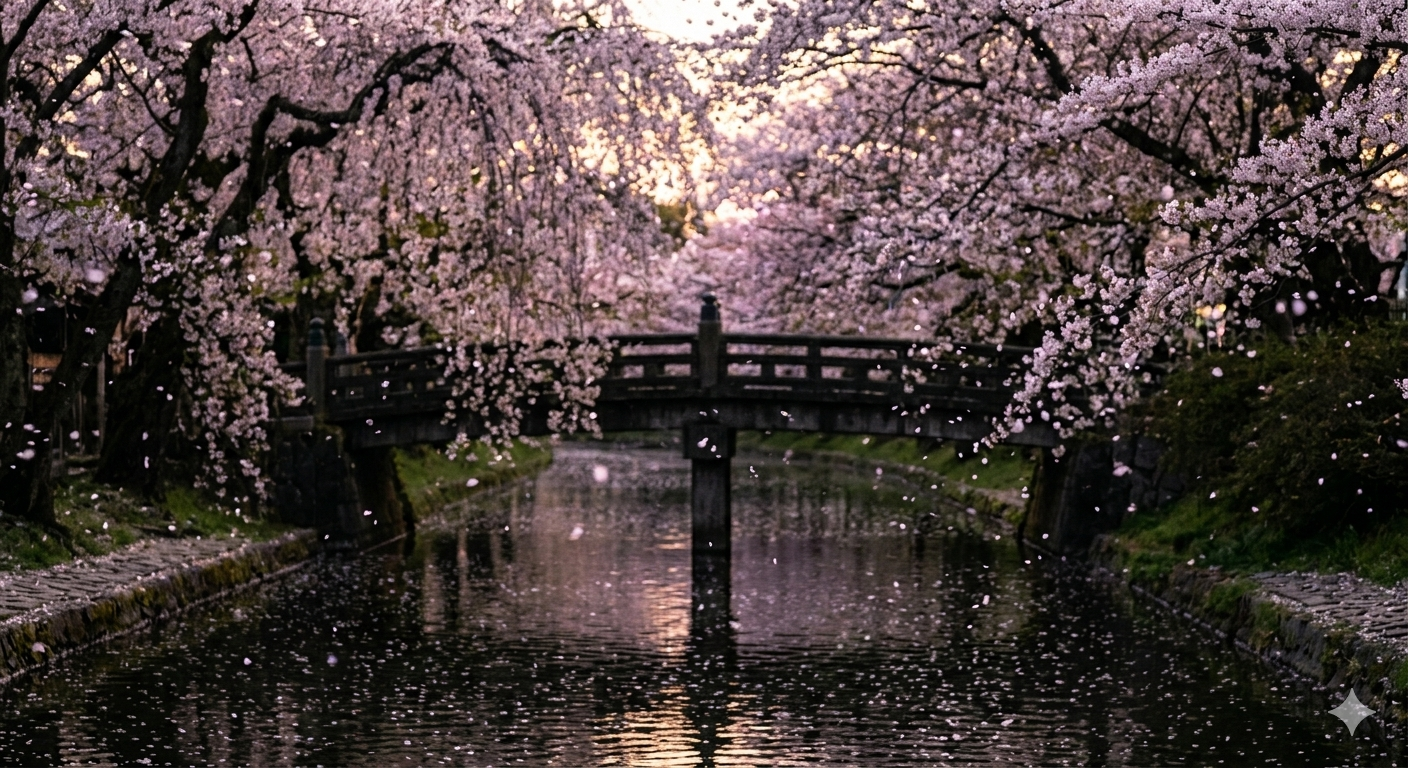
A fleeting scattered of petals faintly coloring the water beneath the dusk light. Japanese people have found an endless sense of “Mujo” (Impermanence) in this timeless scene since the Heian period.
Impermanence in Tsurezuregusa and Hōjōki
The essays Tsurezuregusa and Hōjōki also reflect on the transient nature of life.
Hōjōki records disasters such as fires, earthquakes, and famine—events beyond human control that quickly erase what people have built.
Tsurezuregusa, by contrast, quietly observes the shifting nature of human affairs and the unpredictability of daily life.
Prosperity and decline, meeting and parting—nothing remains unchanged.
Cherry Blossoms and the Samurai Ideal
This sensitivity toward how things end eventually came to be reflected in ways of living.
Cherry blossoms became associated with the ethos of the samurai.
As expressed in the phrase, “Among flowers, the cherry blossom; among men, the samurai,” both came to represent an ideal way of life.
For the samurai, what mattered was not longevity, but resolve.
To devote oneself fully to a cause, and to withdraw without hesitation, was considered honorable.
Cherry blossoms, after reaching full bloom, fall without delay.
They do not cling to the branch until they fade.
In that image, one finds the beauty of knowing when to depart.
What the samurai saw in cherry blossoms was not simply the act of falling,
but a way of living—one that does not miss its moment and lets go without hesitation.
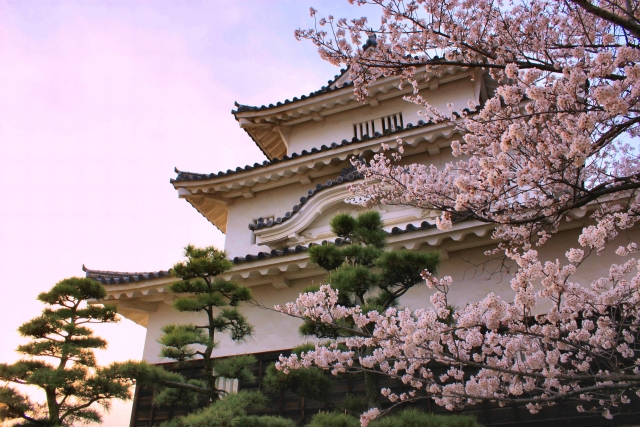
“Among flowers, the cherry blossom; among men, the warrior.” This reflects the Samurai’s ideal of a graceful and resolute end.
Impermanence and the Japanese Sense of Beauty
Cherry blossoms are not considered special in Japan simply because they are beautiful.
In their blooming and falling, people have long reflected on the nature of the world and the shape of human life.
An ending will always come.
Knowing this, how should one live in the present?
Each time the blossoms fall, that question quietly returns.
Cherry blossoms bloom again this year—and once again, they fall.
Beyond impermanence.
・Further reading
Impermanence and the Japanese Sense of Beauty